Selma Alabama Attractions for a Practical Day Trip
Selma Alabama attractions are easy to explore with a car. Use this practical guide to plan museums, Brown Chapel, Old Cahawba, and the voting-rights trail.
 Sammie O
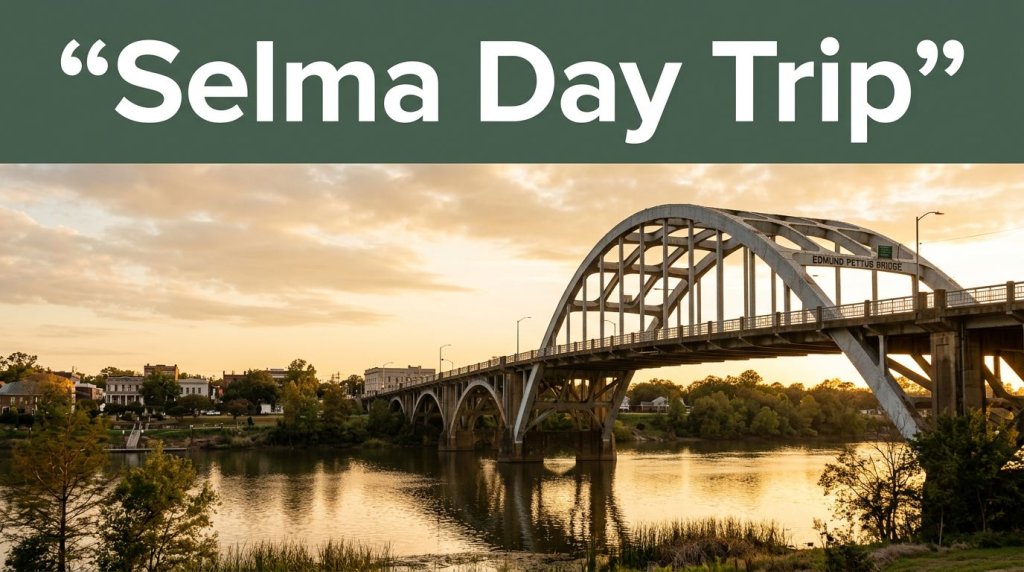
Selma is not a destination where you need to chase attractions across a large city. Most major sites sit near downtown, while Old Cahawba requires a separate rural drive.
Compare Selma Alabama Attractions hotels on Expedia
The main Selma Alabama attractions make the most sense when grouped by location and history. Start at the Edmund Pettus Bridge, visit the museums and Brown Chapel, then decide whether your schedule allows Cahawba or the wider voting-rights trail.
Check hours before leaving, especially for appointment-based museums and active churches. This is the practical order that works best.
Selma Alabama Attractions: Start at the Bridge
The Edmund Pettus Bridge is the first stop for a reason. On March 7, 1965, state troopers and local law enforcement attacked voting-rights marchers as they crossed the bridge during what became known as Bloody Sunday. The event helped create national support for the Voting Rights Act, signed later that year.
The bridge is named for Edmund Pettus, a Confederate general and U.S. senator. That name is part of the site’s difficult history. The bridge’s current importance comes from the people who crossed it to demand voting rights and from the national movement that followed.
You can cross the bridge without buying a ticket. Allow time to look toward the Alabama River and walk at a respectful pace. Don’t stop in the roadway or use the bridge approach as a casual parking area.
Allow Time for the Selma Interpretive Center
The Selma Interpretive Center is at 2 Broad Street, near the bridge and the beginning of the Selma to Montgomery National Historic Trail. The current listing gives free admission and hours of Monday through Saturday, 9:00 a.m. to 4:30 p.m. It lists closures on Thanksgiving, Christmas Day, and New Year’s Day.
The center gives the bridge and the 1965 marches more context than a quick photo can provide. Check the Selma Interpretive Center’s Civil Rights Trail listing before visiting, since renovation work and schedules can change.
Visit the Museums That Explain Selma’s History
The strongest Selma Alabama attractions are not all scenic. The museums explain what happened, who organized it, and what local life looked like beyond the bridge.
Set Aside Time for the Voting Rights Museum
The National Voting Rights Museum and Institute is at 6 U.S. Highway 80 East. Its current posted schedule lists Monday through Thursday, 10:00 a.m. to 4:00 p.m. Friday, Saturday, and Sunday visits are by appointment. Hours are subject to change.
Give this museum enough time to read rather than walking through it in ten minutes. Its focus is the local voting-rights movement and the people who made Selma a national center of that struggle. The National Voting Rights Museum and Institute publishes its current contact and hours information.
Use the Old Depot Museum as a Weekday Stop
The Old Depot Museum is at 4 Martin Luther King Street. Its current hours page lists Monday through Friday, 10:00 a.m. to 4:00 p.m. Current tourism listings report free admission, while some listings mention Saturday access by appointment. A weekday visit is the safer choice.
The museum adds local and railroad history to a day otherwise focused on civil rights. It is also close to Brown Chapel, so grouping both stops reduces backtracking. Confirm weekend access directly before traveling.
Visit Brown Chapel AME Church by Appointment
Brown Chapel AME Church at 410 Martin Luther King Street was a major meeting place during Selma’s voting-rights campaign. Organizers and marchers used the church, and the 1965 march route began near here before reaching the bridge.
The building is an active congregation, not a museum with guaranteed daily walk-in hours. The church’s official schedule covers worship services, not regular visitor tours. Current visitor information points to appointment-based interior visits and advises calling ahead. Contact Brown Chapel at (334) 874-7897 before arriving.
Ask about access, photography, and any service or church activity that affects your timing. Dress respectfully, keep voices low, and don’t assume a scheduled worship service is a tour opportunity.
Even if you can only see the exterior, pause and read about the church before moving on. Brown Chapel is one of the places where the movement’s organization becomes easier to understand.
Add Sturdivant Hall and Downtown Selma
Sturdivant Hall is a mid-19th-century Greek Revival house and one of the city’s main architectural stops. It offers a different view of Selma, centered on older residential and civic history rather than the 1965 movement.
Current public hours can change, so confirm access before making it a fixed stop. The City of Selma’s attraction guide lists Sturdivant Hall with the city’s other major sites and is useful for checking the current local lineup.
Downtown Selma works best as a short walking and driving area between scheduled visits. Add a riverfront pause or a look at nearby historic buildings, but leave room for closures. Smaller attractions may not keep the same hours as the larger visitor centers.
Make the Drive to Old Cahawba Archaeological Park
Old Cahawba Archaeological Park is the best Dallas County add-on if you want more than downtown history. Cahawba was Alabama’s first state capital, from 1820 to 1825. It later became a county seat and Civil War prison before floods, economic decline, and relocation left the town in ruins.
See Alabama’s First Capital Site
The park is at 9518 Cahaba Road in Orrville, a rural drive west of Selma. Marked roads, archaeological remains, open grounds, and the former town layout make the visit different from a museum. You need time outside, not only time inside a visitor center.
The grounds are currently listed as open daily, 9:00 a.m. to 5:00 p.m. The visitor center is listed Thursday through Monday. Official pages differ between a 10:00 a.m. to 4:30 p.m. schedule and a 10:00 a.m. to 5:00 p.m. schedule. Call 334-872-8058 before going.
Treat Cahawba as a Rural Excursion
Guided tours are by appointment and should be booked two weeks ahead. A limited number of cruiser bikes are available free with paid admission on a first-come, first-served basis.
Old Cahawba is easy to add on a map and easy to underestimate in real life. Fill the tank and pack water in Selma.
Food, fuel, and lodging become less available outside town. Wear closed shoes and plan for direct sun, uneven ground, insects, and summer heat. Cahawba works best as a half-day stop.
Continue Along the Selma to Montgomery Trail
The Selma to Montgomery National Historic Trail gives you a wider view of the 1965 voting-rights campaign. It follows the route of the march and connects Selma with interpretive stops beyond the city.
Add Lowndes County When It Fits Your Route
The Lowndes County Interpretive Center is a practical addition when you’re already driving toward Montgomery or planning a longer civil-rights route. NPS interpretive centers have no admission fee. Group visits to the Lowndes or Montgomery centers can be reserved through the trail office at (334) 421-8362.
Don’t force this stop into a tight Selma day. The bridge, Brown Chapel, and two museums need more time than a quick checklist suggests. Use the NPS Selma to Montgomery National Historic Trail page to check trail information, programs, and reservations.
Lowndes County fits best when you have time to consider the wider route, not when you’re collecting another quick photo.
Build an Itinerary That Matches Your Time
The easiest schedule keeps fixed-hour sites together and puts outdoor stops at the cooler parts of the day.
A One-Day Selma Plan
- Start at the Edmund Pettus Bridge, then visit the Selma Interpretive Center when it is open.
- Go to the National Voting Rights Museum before lunch, especially on Monday through Thursday.
- Schedule Brown Chapel in advance, then visit the Old Depot Museum.
- Use remaining daylight for Sturdivant Hall, downtown buildings, or a short riverfront stop.
This order keeps the central Selma Alabama attractions close together. It also protects your morning from a museum that opens later or an appointment that shifts.
When Two Days Make More Sense
Use a second day for Old Cahawba and Lowndes County. That gives you space for rural driving, outdoor walking, and a meal break without cutting the central sites short.
An extra day also helps if Brown Chapel or the National Voting Rights Museum is appointment-only during your dates. You won’t have to choose between a scheduled visit and a major museum.
Plan Transportation, Weather, Meals, and Hotels
Selma is primarily a driving destination. A personal car or rental car is the practical option for combining downtown, Cahawba, and Lowndes County. No current local transit schedule was verified for a sightseeing plan, and rideshare availability should not be your only return option outside downtown.
Downtown stops are close enough to group, but use marked parking and avoid stopping on the bridge approach. Fill up in Selma before driving to Cahawba. Food, fuel, and lodging become less available outside town.
Use Selma as Your Base
Staying in Selma keeps meals, fuel, and overnight options in one place. Compare final hotel prices after taxes and fees, then check parking and the drive back to your first morning stop. Germ Trips has a practical guide to affordable Selma hotels.
Expect August Heat and Variable Hours
August is hot, humid, and capable of quick thunderstorms. Visit the bridge and Cahawba early, carry water, use sun protection, and keep a flexible indoor backup.
Call Brown Chapel, the National Voting Rights Museum, Old Depot Museum, and Cahawba before leaving, even when a posted schedule looks clear. Restaurants may close between meal periods or operate on limited weekly schedules. Check same-day hours through the business directly or the Selma and Dallas County Chamber before committing to dinner.
Event dates also change. Confirm festivals, church programs, and special openings with the venue before booking a trip around them.
Conclusion: Choose a Planned Selma Route
Selma rewards planning more than speed. The bridge, Interpretive Center, voting-rights museum, Brown Chapel, and Old Depot Museum form the strongest first-day route. Old Cahawba and Lowndes County belong on a second day or a longer driving itinerary.
The practical rule is simple: confirm access, keep a car, and leave room for history that deserves more than a quick photo. That approach gives you the best chance to experience Selma Alabama attractions without rushing the places that matter most.
Compare places to stay in Selma Alabama Attractions
Live prices and availability on Expedia, for the dates you choose.
Check hotel prices →Booking is handled by Expedia. We may earn a commission, at no extra cost to you.

Sammie O publishes Germ Trips, a travel guide covering hotels, restaurants, airport transfers and chauffeur services. The guides aim for practical detail and a clear recommendation rather than an undifferentiated list. Where a town has no good option, the guides say so and point to the nearest one that does. Guides are AI drafted. A small number have been checked against official listings, and those say so on the page.
View All Articles
