

If you are figuring out where to stay in Troy for the first time, keep the decision simple. Start with downtown. That puts you closest to the city’s main streets, the best food, and the easiest walk to the sights.
Troy is compact, but the feeling changes block by block. One part gives you brick storefronts and busy sidewalks. Another gives you river views and a slower pace. A first visit goes better when you choose the right base, not the fanciest listing.
WHY DOWNTOWN TROY IS THE BEST DEFAULT
Downtown Troy is the cleanest choice for first-time visitors. It gives you the most useful mix of walkability, restaurants, and easy access to the historic core. If you only have a weekend, this is where you want to be.
You can handle most plans on foot from here. Coffee, dinner, casual shopping, and the city’s older streets are close together. That matters more than extra hotel features when you do not know the city yet.
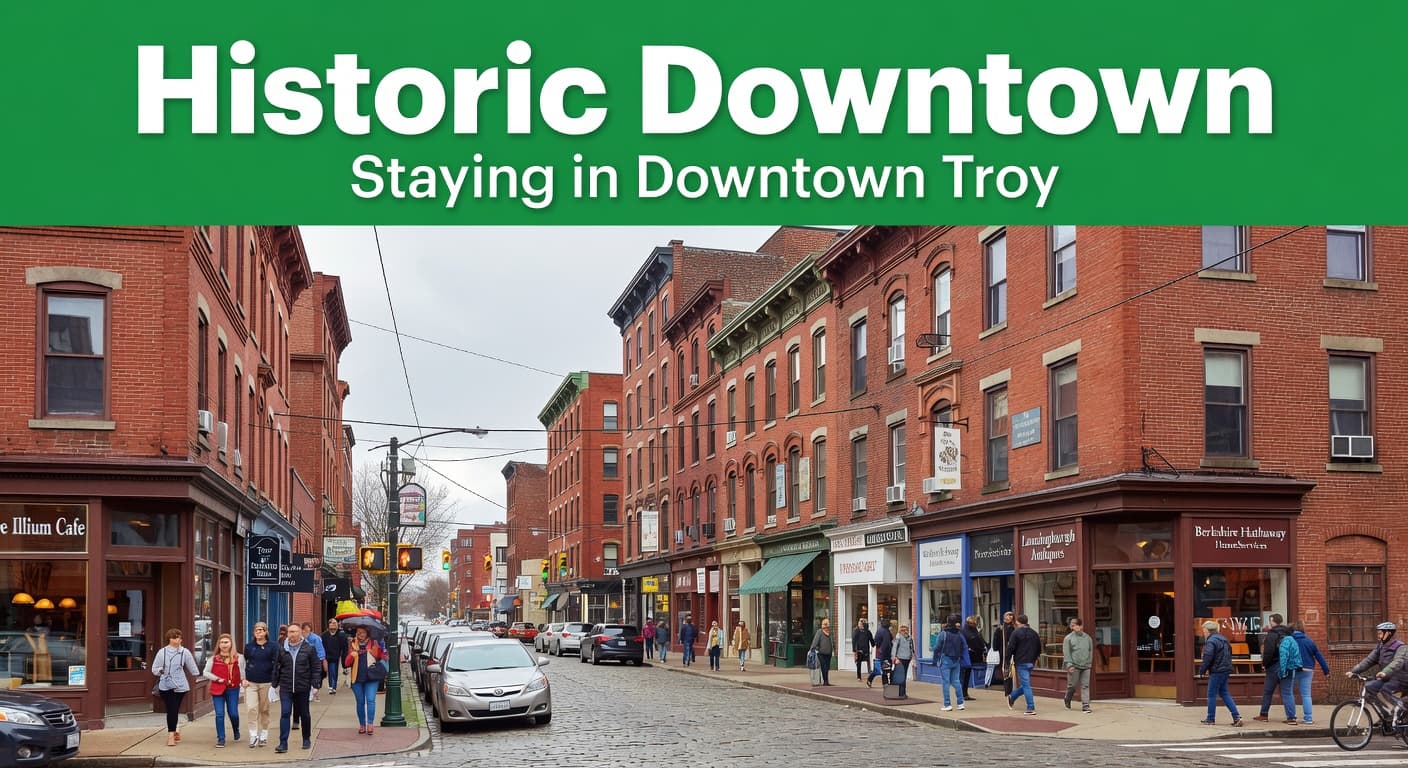
If you want a quick feel for the area before you book, ILoveNY’s 48 Hours in Troy guide maps the core downtown experience well. It shows why the city works best when you stay close to the center.
For a first trip, distance matters more than hotel size. Stay closer to the action and you spend less time planning around it.
Downtown also works because it keeps your arrival simple. You check in, park once, and move around without turning every meal into a drive. That is the right setup for a short trip.
QUICK COMPARISON OF THE MAIN AREAS
Troy does not have a long list of hotel districts. It has a few useful choices, and each one fits a different kind of traveler.
| Area | Best For | Why It Works | Tradeoff |
|---|---|---|---|
| Downtown Troy | First-time visitors, walkable stays | Close to restaurants, shops, and the historic core | Fewer big hotel chains |
| River Street and Waterfront | River views, easy dining, relaxed pace | Near the Hudson and still close to downtown | Some blocks feel quieter at night |
| Historic District | Architecture lovers, slower mornings | Pretty streets and a local feel | Less nightlife and fewer short-stay options |
| Near RPI / north edge | Budget-minded travelers, car trips | Easier parking and access by car | Less walkable to the main sights |
The table makes the main point clear. If your trip is short, downtown is the safest answer. If you want a more relaxed stay, move closer to the river or the historic blocks.
RIVER STREET AND THE WATERFRONT
River Street is the smart second choice. It gives you a little more breathing room than the busiest downtown blocks, but you still stay close to everything that matters. For many visitors, that is the sweet spot.
This area works well if you want your stay to feel a little calmer without getting cut off from the city. You can walk to dinner, get to downtown fast, and still enjoy the Hudson River nearby. That setup is hard to beat if you like a morning walk or an evening by the water.

If your plans center on sightseeing and local activities, things to do in Troy on Expedia gives you a clean way to match your hotel to your schedule. That helps if you want to stay near the river but still keep the main attractions in reach.
River Street also fits travelers who want easy access without the feel of a dense downtown block. It is not isolated. It is simply more measured. If you like a place that feels settled at night, this area makes sense.
THE HISTORIC DISTRICT AND THE RPI EDGE
The Historic District is the best choice if you want Troy’s older side. This is where the city feels most like a preserved East Coast river town. The streets are more residential in places, the buildings have more character, and the pace is slower.
Choose this area if you care about architecture and quiet mornings. It is a better fit for travelers who want a local feel over convenience. You may not be steps from every restaurant, but you get a more relaxed stay.
The RPI edge is different. It works better for travelers with a car, people visiting campus, or anyone trying to keep rates lower. You trade some walkability for easier access and fewer crowds. That is a fair trade if your trip is functional and you do not plan to spend all day downtown.
If you are comparing rates, current Troy hotel deals on Travelocity are useful for checking how price shifts by area. Use that as a baseline, then decide whether you want to pay for location or save a little outside the core.
The rule is simple. Historic District for atmosphere. RPI edge for value and parking. Downtown for everything else.
WHAT TO CHECK BEFORE YOU BOOK
Location is the first filter. After that, you need to check the practical details that affect the stay itself.
Start with parking. If you are driving into Troy, confirm whether parking is on-site, nearby, or paid separately. That one line in the listing can change the total cost fast.
Then check walk time, not just map distance. Five blocks in a city like Troy can feel short or long depending on where you are headed. If you want dinner, coffee, and nightlife, pick a place on the downtown side of your route.
Also look at your schedule. If you are only in town for one night, stay central and keep it simple. If you are staying longer, a quieter block near the river or the historic district can make more sense.
Use this quick filter before you book:
- Short stay: Pick downtown.
- Car trip: Pick the RPI edge or nearby streets with parking.
- Quiet weekend: Pick River Street or the Historic District.
- Food-first trip: Pick the downtown core.
- Sightseeing trip: Pick the area closest to the historic blocks.
That keeps the choice practical. You do not need perfect hotel research. You need the right base for the way you travel.
CONCLUSION
For a first visit, the answer is clear. Downtown Troy is the best place to start because it gives you the easiest version of the city. You walk more, guess less, and spend your time in the right part of town.
If downtown is full or not the right fit, move to River Street or the Historic District. Both keep you close without losing the feel of Troy. Pick the area that matches your trip, then book the place that saves you the most time on arrival.
Compare places to stay in Troy
Live prices and availability on Expedia, for the dates you choose.
Check hotel prices →Booking is handled by Expedia. We may earn a commission, at no extra cost to you.

Sammie O publishes Germ Trips, a travel guide covering hotels, restaurants, airport transfers and chauffeur services. The guides aim for practical detail and a clear recommendation rather than an undifferentiated list. Where a town has no good option, the guides say so and point to the nearest one that does. Guides are AI drafted. A small number have been checked against official listings, and those say so on the page.
View All Articles